
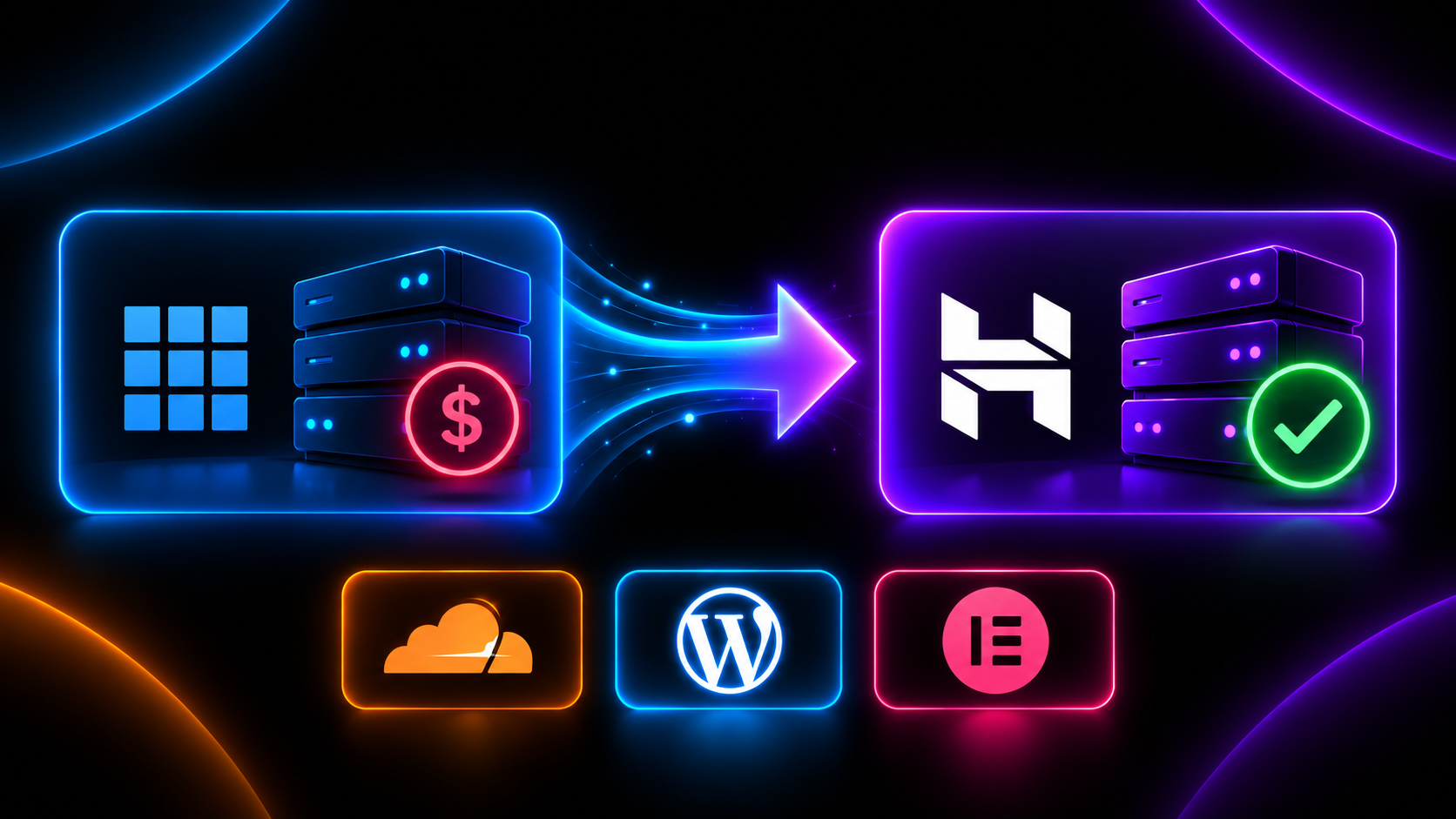
For years, Bluehost handled the hosting for my website just fine. It did what I needed it to do, and like a lot of people, I originally signed up at an attractive introductory price. The problem came later, when it was time to renew.
That is when the cost started becoming harder to justify.
Website hosting is one of those expenses that is easy to forget about until the renewal notice arrives. Introductory pricing can make a hosting plan seem incredibly affordable at first, but the long-term price is what really matters. When I looked at what it was going to cost me to continue hosting my site with Bluehost, I decided it was finally time to see what else was out there.
I Kept Hearing About Hostinger
Hostinger wasn’t completely new to me. I had heard the name several times through YouTube sponsorships and tech creators over the years.
One of the more notable examples was NetworkChuck. If you spend much time watching videos about networking, Linux, cybersecurity, servers, or homelabs, there is a good chance you have come across his channel.
After hearing about Hostinger enough times, I decided to take a closer look.
Normally, I am a little skeptical when a company seems to be everywhere in sponsorships. Advertising gets your attention, but it does not automatically mean the product is right for you. In this case, though, Hostinger’s pricing and feature set made enough sense for my needs that I was willing to give it a try.
And fortunately for me, I was also able to use NetworkChuck’s 10% discount code, which made the switch even cheaper.
The Renewal Price Was the Push I Needed
My biggest motivation for leaving Bluehost was not that the service suddenly stopped working. It was simply the cost of continuing to use it.
There is a big difference between asking, “Is this hosting service good?” and asking, “Is this hosting service still worth what I am paying for it?”
For me, that answer had changed.
I run my website as a creative and personal project, so I want dependable hosting without spending more than necessary just to keep the site online. When another provider can offer the features I need at a considerably more attractive price, it becomes difficult to ignore.
That is ultimately what pushed me toward Hostinger.
My Current Website Stack
The move also gave me an opportunity to think more intentionally about the different services powering my website.
My current setup is:
- Hostinger for website hosting
- Cloudflare as my domain registrar and for DNS and other web services
- WordPress as my content management system
- Elementor as my page builder
I like separating these responsibilities instead of relying on one company for absolutely everything.
Hostinger handles the server and hosting side. WordPress handles the content. Elementor gives me control over the visual design. Cloudflare handles my domains and gives me another layer of tools around DNS, security, performance, and traffic management.
It feels less like buying an all-in-one website package and more like assembling my own tech stack.
Switching Hosts Wasn’t as Scary as It Sounds
Moving an existing website to another hosting provider can sound intimidating, especially when you already have a functioning WordPress installation.
There are databases, files, plugins, themes, email addresses, DNS records, SSL certificates, and plenty of other things that seem like they could go wrong.
That is probably one reason people stay with the same hosting company for years. Even when the price goes up, paying the renewal can feel easier than moving everything somewhere else.
But once I decided I was actually going to make the switch, it became another technical project to work through rather than something to avoid.
The important part is making backups, taking your time, and making sure everything is working on the new host before completely cutting over.
Introductory Pricing Isn’t the Whole Story
One lesson I have taken from the experience is that you should never judge hosting solely by the price shown on the front page.
The number that matters just as much is the renewal price.
A hosting plan might look inexpensive when you initially sign up, but websites tend to stick around for years. The difference between introductory pricing and renewal pricing can become significant over time.
Whenever I compare hosting providers now, I want to know:
- What does it cost today?
- What does it cost when the initial term ends?
- What features are actually included?
- How long do I have to commit to get the advertised price?
- What will it realistically cost me over several years?
Those questions give you a much better picture than the introductory yearly rate alone.
So Far, I’m Glad I Switched
The funny thing is that YouTube sponsorships actually worked on me this time.
After hearing about Hostinger repeatedly, particularly through NetworkChuck, I finally gave it a closer look when Bluehost’s renewal cost gave me a reason to start shopping around.
The combination of Hostinger’s pricing, the features I needed, and the additional 10% savings from NetworkChuck’s code made the decision much easier.
I didn’t switch because Bluehost was unusable. I switched because I reached a point where I no longer felt the renewal cost made sense for my website.
Sometimes the best time to reconsider a service isn’t when it breaks.
It’s when the bill arrives.